
Designing Enlightenment: A talk at Harvard
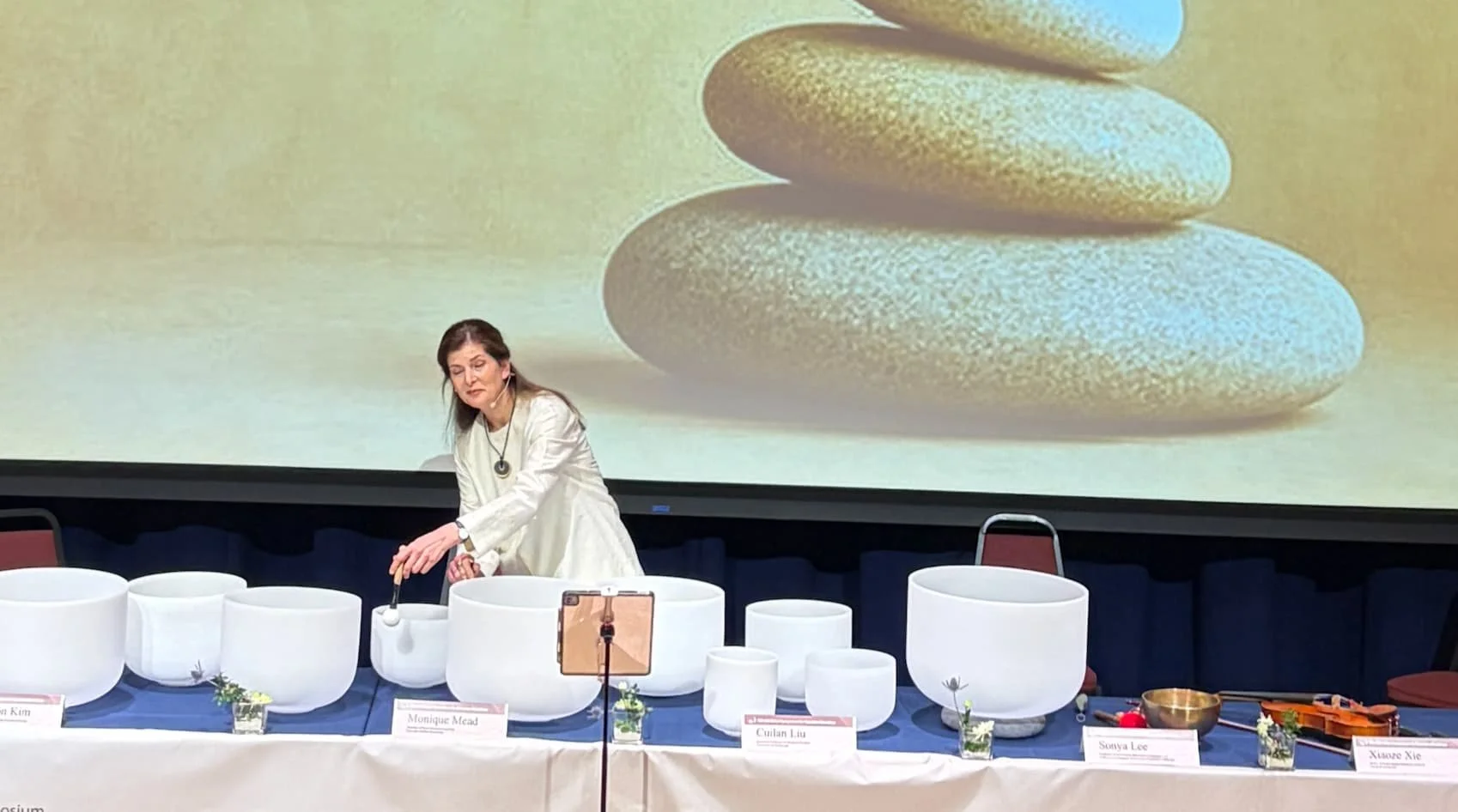
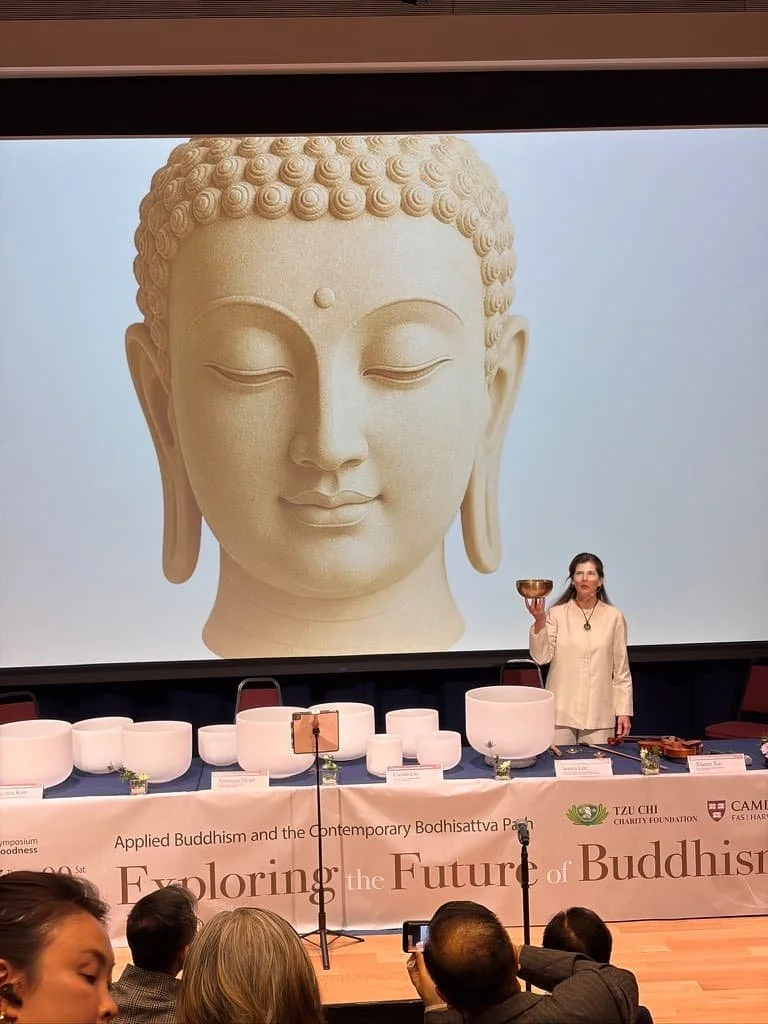
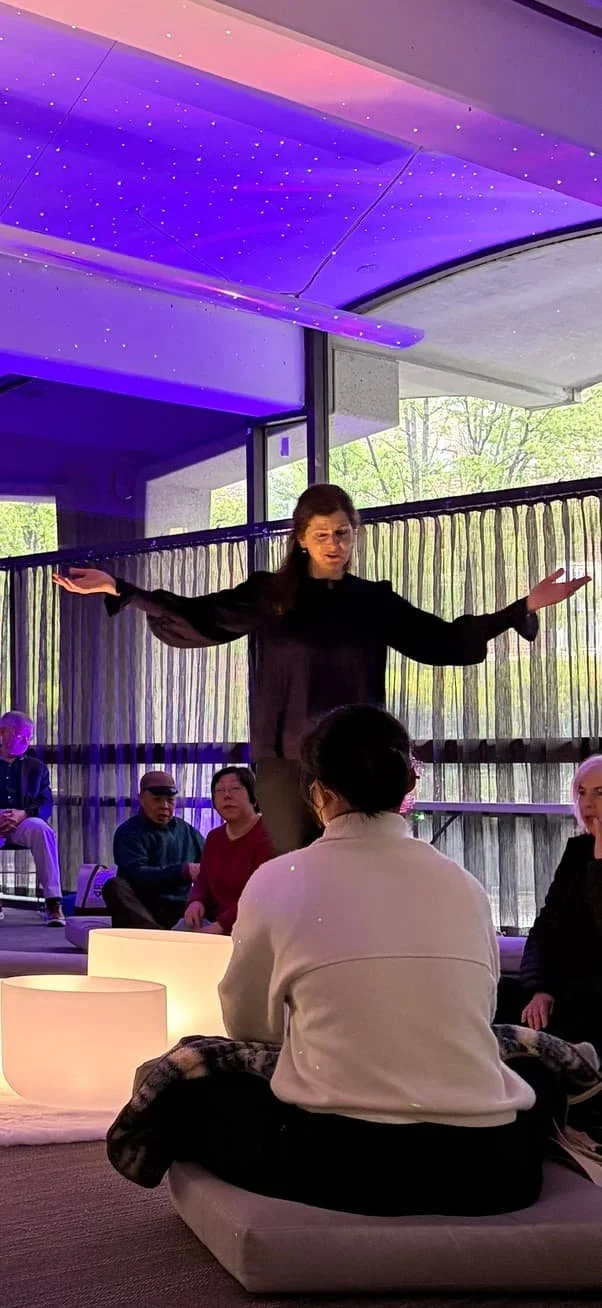
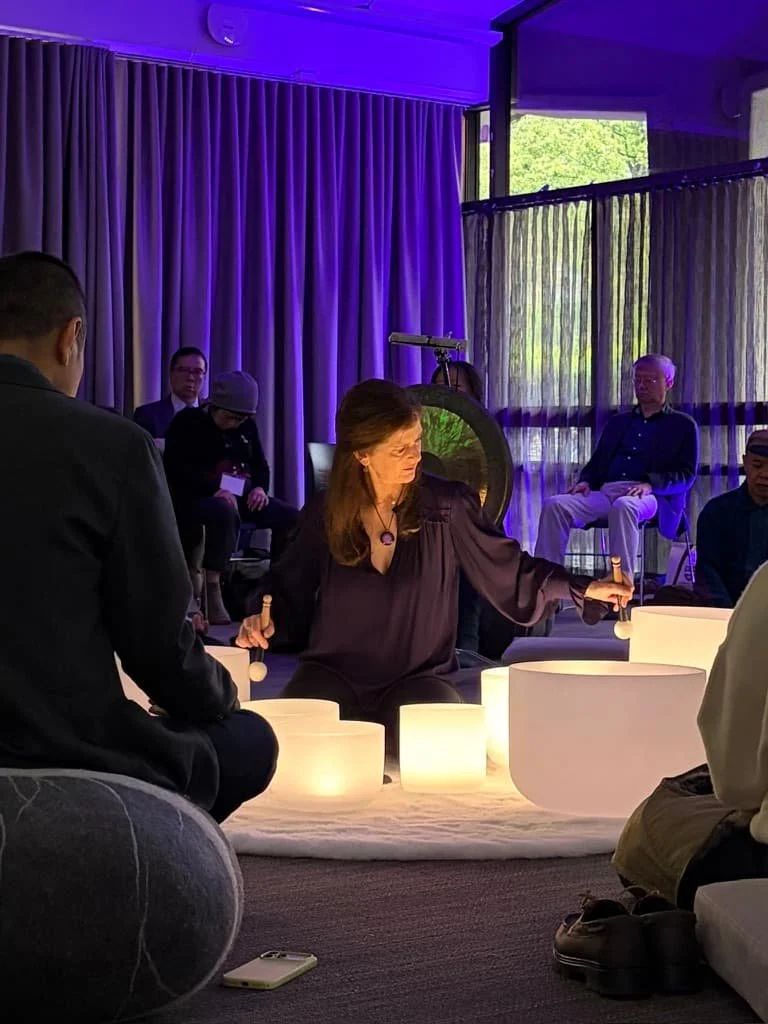
As we transition from school mode into summer mode, I wanted to share some impressions from my most recent campus visit: a beautiful symposium at Harvard centered on the influence of Buddhism on modern life.
Commonly, when I share my work in academic settings, presenters ask me to speak about the research, science, and impact of sound on the nervous system. In contrast, Harvard CAMLab Associate Director Chenchen Lu requested a presentation within the context of their exhibition, Journey to Enlightenment, offering a perspective on how Buddhism influences design and the ways we make meaning of the world.
Design enlightenment? Not a simple request.
Those who attended one of my preview talks at AWC will know that I opted for a Zen-inspired, minimalist approach, using violin and singing bowls to accompany my explanation of compositional design in crafting meditative sound protocols.
“We don't see things as they are, we see things as we are.”
I began my talk by illustrating this quote from Anaïs Nin with a metal singing bowl and several different mallets: the singing bowl represents the world around us and the infinite ways we engage with it. The mallets represent our state of consciousness—the conditioned perspective that shapes our experience of the world.
Strike the bowl with a hard mallet, and it responds with a percussive clang. Tap it with a soft, weighted mallet, and it rings out in rich overtones. Whirr it with a milk frother, and it buzzes back with caffeinated zip. At every moment, the world resonates to the mallet of our mind. At every moment, we create the soundtrack of our experience.
Buddhist wisdom acknowledges that suffering arises from our attachment to thoughts generated by the conditioned mind, and that freedom from suffering becomes possible only when we are able to witness our thoughts without being governed by them.
This is where meditation comes in.
The steps to meditation are simple: sit. focus. remain present. But anyone who has tried to meditate will know that the mind is not easily seduced into stillness.
I illustrated this with a violin excerpt that repeats a “mantra” bass line of four descending notes. The task is simple: keep your mind on these notes—just repeat them. And what does the violin do? It faithfully repeats the bass line, but then wanders into a simple variation, followed by increasingly elaborate ones, until it ends in a frantic pileup of notes, bringing home the frustrations many of us experience when attempting to practice meditation.
Could there be an easier way to access meditative states?
Composer John Cage was deeply influenced by Zen Buddhism and Eastern thought, and he adopted the Indian philosophy that “the purpose of music is to sober and quiet the mind, thus making it susceptible to divine influences.”
I came across this quote during the pandemic, when I was searching for a way to address the alarming rates of stress, anxiety, and depression at Carnegie Mellon University.
How, then, would one create music that could quiet the mind? Leaning into principles of neuroscience, music therapy, and composition, I began to develop soundscapes that followed the stages of meditation: grounding. focus. bliss. expansion.
For the Harvard audience, I demonstrated the design of these protocols using quartz singing bowls, allowing listeners to engage with the sounds and mental shifts people experience during sound baths at my studio—the sensation of low-frequency vibrations in the body, thoughts dissolving into sound, and a sense of floating. freedom. peace.
A sound journey may not end in enlightenment, but it may relieve suffering and shift our perspective such that the world begins to resonate with more beauty and less clang.

The highlight of my visit to Harvard was CAMLab's exhibition, Journey to Enlightenment. More than a decade in the making, this immersive, research-driven exhibition traces over 2,500 years of Buddhist history, from its origins in early South Asian sacred sites to its continued expression in contemporary humanitarian practice.
I was particularly moved by the immersive multi-media tour of the Guanyin Pavilion and the significance of this beloved bodhisattva. We were told that the reason this Guanyin statue has many different faces is so that all who call upon her would see themselves reflected in her presence. I can attest that indeed, I saw in her the very embodiment of the musician-healer. Guanyin means “the one who hears the cries of the world," and as the visual narrative unfolded, I saw all the pieces come together: nuanced listening, holding space, expanding awareness–all with deep compassion, and through the power of sound.
This experience reaffirmed my lifelong conviction that music is a vessel that can hold the suffering of the world, and transform it.
Being among like-minded artists, scholars, and seekers brought fresh inspiration for my own practice that I look forward to sharing through the sound work I offer in Pittsburgh, and beyond.
The journey to enlightenment takes lifetimes, and for whatever length of time we can travel this path together, I am grateful for it.
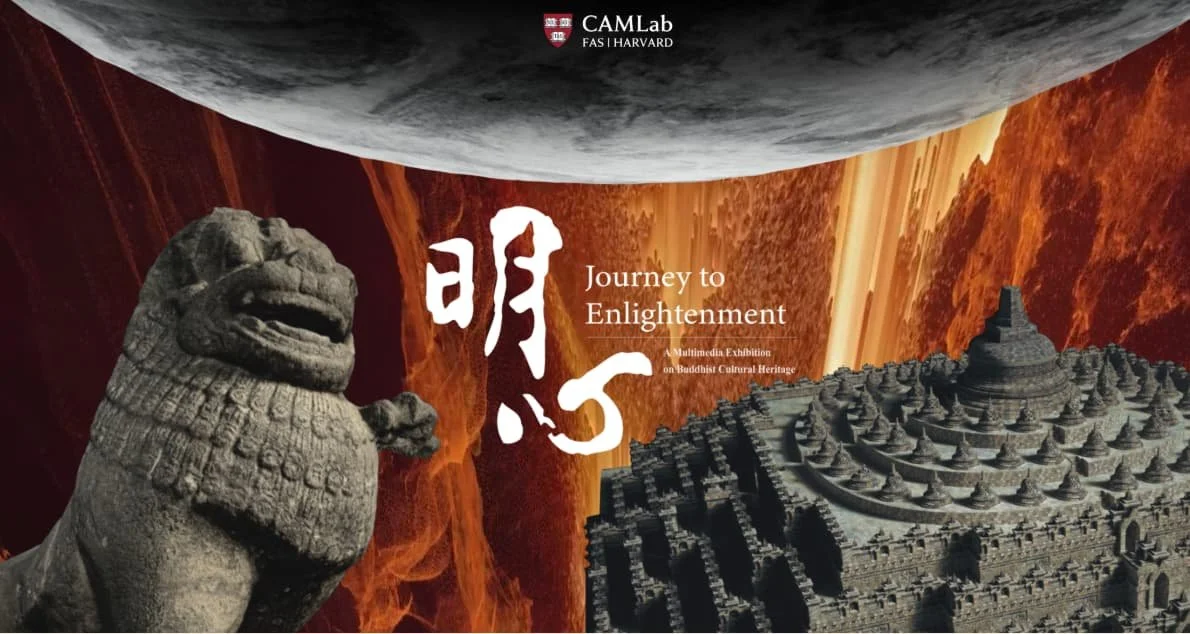
The Harvard CAMLab Journey to Enlightenment exhibition is open to the public with guided tours through September 2026. If you're in the Boston area, I highly recommend visiting this immersive art experience.
We will also be collaborating with CAMLab for the June Sound Practitioner Training, allowing participants to experience the wonders of this exhibition right here in Pittsburgh within the context of the course.